
AS Ano Poli: Fifty Years of Oi Kastrinoi
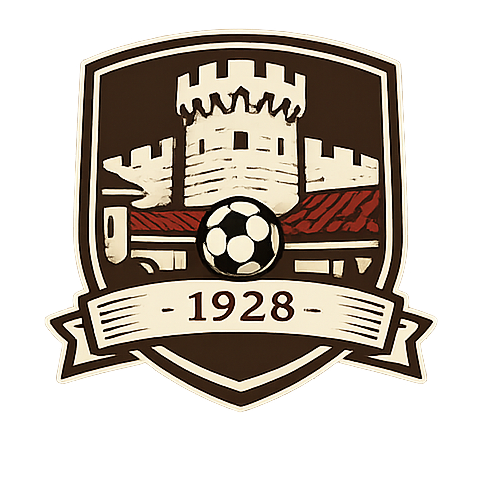
AS Ano Poli emerged from Thessaloniki's working-class waterfront district in 1928, a port city where football ran as crucially as the mills and shipping lanes that defined the local economy. For the first half-century and beyond, the club occupied that peculiar Greek middle ground—neither a national power nor an also-ran, but the reliable backbone of the domestic top flight, the kind of outfit whose seasons accumulated into anonymity through sheer competence. The walls that would dominate the club's crest originated from the upper-town fortifications, a hundred metres separating them from the away supporters' terrace—a geographical accident that became totemic. It spoke to Ano Poli's permanent position as the city's outsider fixture, never quite fashionable enough for wealthy districts, never quite unworthy of the conversation. Through the late 1970s and 1980s, the Kastrinoi—the Wall Folk—built their identity less through trophies than through belonging, through the polyester and cigarette haze of their ground, through shirts the colour of dried earth and wheat that became unremarkable through repetition. A manager of that era established the template: steady mid-table work, occasional domestic cup runs, European nights sparse enough to be treasured for decades. The club reached the quarter-finals of Europe's premier competition in the years before the new century, an accomplishment that seemed to anoint Ano Poli as genuine mid-table furniture with occasional golden moments. That proximity to continental glory, layered atop a sequence of domestic runners-up finishes, created a particular fanbase character: one that wore past near-misses as proof of loyalty, that treated survival itself as victory.
The millennium's arrival brought catastrophe disguised as construction. In 2001, with the stadium half-rebuilt and funds exhausted, Ano Poli descended into the second division—a fall that wounded not through sporting failure alone but through financial recklessness left unresolved. The club carried the debt through four seasons in the lower tier, years that should have dissolved its identity but instead fossilized it. The supporters who remained wore second-division membership as merit badges, evidence of loyalty that no championship could purchase. Extraordinarily, even banished from Greece's elite, the club reached the quarter-finals of Europe's primary competition again—an achievement that locally eclipsed the promotion that followed it, that seemed to vindicate a particular dignity, the notion that a club's true worth lay not in advancement but in persistence under impossible weight. Promotion arrived in 2005 less as triumph than as conditional release. The rebuilt stadium was finally completed, but the financial phantom remained, a limb the club could never quite amputate. The Kastrinoi returned to the top flight as survivors, not conquerors—a distinction that would define two decades.
From 2005 onward, AS Ano Poli has occupied an uneasy purgatory: too skilled and too supported to fall again, yet too scarred and too mid-table to generate the momentum for meaningful ascent. Twenty years of mid-table campaigns have been written by financial trauma. The club fields competitive squads year to year, but never comfortable enough to build consecutive seasons into something cumulative. The money that might have lifted Greek football's secondary powers moved to the continental metropoles instead. Thessaloniki's industrial fortune shifted with the port's slow transformation. Yet the fanbase contracted rather than scattered, becoming smaller, fiercer, more insular in its devotion. The Kastrinoi are fewer than they once numbered, but those who remain do not follow Ano Poli as supporters follow other clubs; they inhabit it as an identity. The brown-and-wheat kit has faded into the background noise of the modern marketplace. The crest walls mean less to supporters raised when the club's trauma was already history. What confronts Ano Poli now is the perpetual question every mid-table survivor eventually faces: whether to accept permanent residence, or whether the accumulated fury of the Kastrinoi might finally compel something more.